Plate XVI · gold-sheened surface feeder
Rudd
Scardinius erythrophthalmus
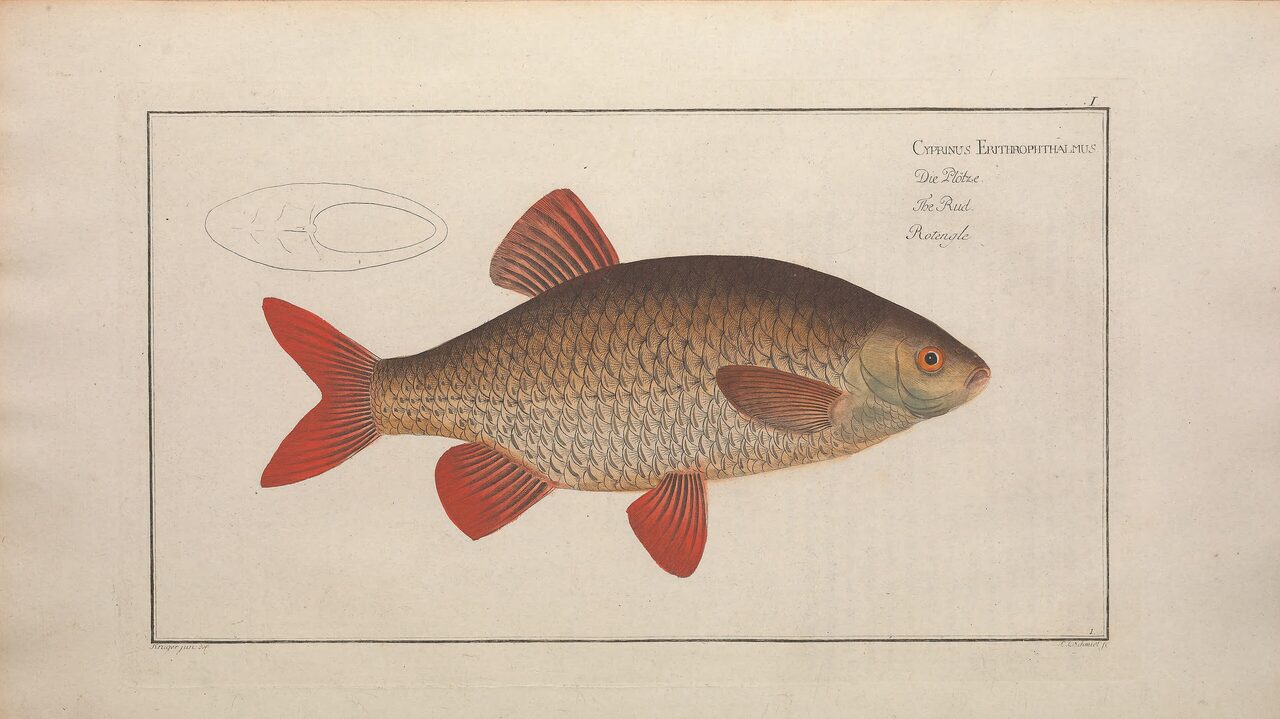
How to know it at once
- Upturned mouth - the lower jaw juts up; a surface feeder. The safest sign against the roach.
- Fiery fins - pelvic, anal and tail fins glow orange to blood-red.
- Dorsal fin set back - it begins clearly behind the pelvic fins.
- Keeled belly, golden eye - a sharp belly edge and a yellow-gold iris.
The rudd is a sociable, golden shoal fish of warm, quiet, weedy water. Where a river slows, it seeks out the shallow, plant-rich edges: bays and backwaters, impounded reaches, the margins of reed and water-lilies. In the Franconian Saale you meet it in the still, warm corners rather than in the open current.
She lives with her head tilted to the sky. That upturned mouth is made for the surface, plucking insects, seeds and soft green from the film of the water and the weed just beneath it.
- upturned mouth
- dorsal behind the pelvics
- gold eye, keeled belly
- straight, terminal mouth
- dorsal above the pelvics
- red eye, rounded belly
Rule of thumb: a mouth that points to the sky means rudd.
The mouth that looks up
Almost every other fish here reads the bottom or the open water. The rudd reads the ceiling. Its jaw is hinged upwards, so its whole world is the bright film where water meets air - the place where a fallen insect drifts and the soft weed reaches for the light.
What makes the rudd special (here)
Where the two red-finned look-alikes are counted side by side on the Saale and the Main, the rudd is by far the scarcer: a single-figure handful next to hundreds of roach. Landing one is a small, golden stroke of luck.
Because it leans on weedy shallows, the region lends it a hand: in one year alone some 38 kilograms of young rudd were released into the Schondra and the Franconian Saale to keep the golden fish at home.
A careful survey of a single river kilometre found seventeen fish species living side by side, and the rudd was among them - proof of just how varied and alive this stretch of the Saale still is.
In the local plans for the river the rudd is named among the fish worth fostering, together with grayling and nase - a modest little shoal fish that the region has decided is well worth keeping around.
A fish of the vanishing shallows
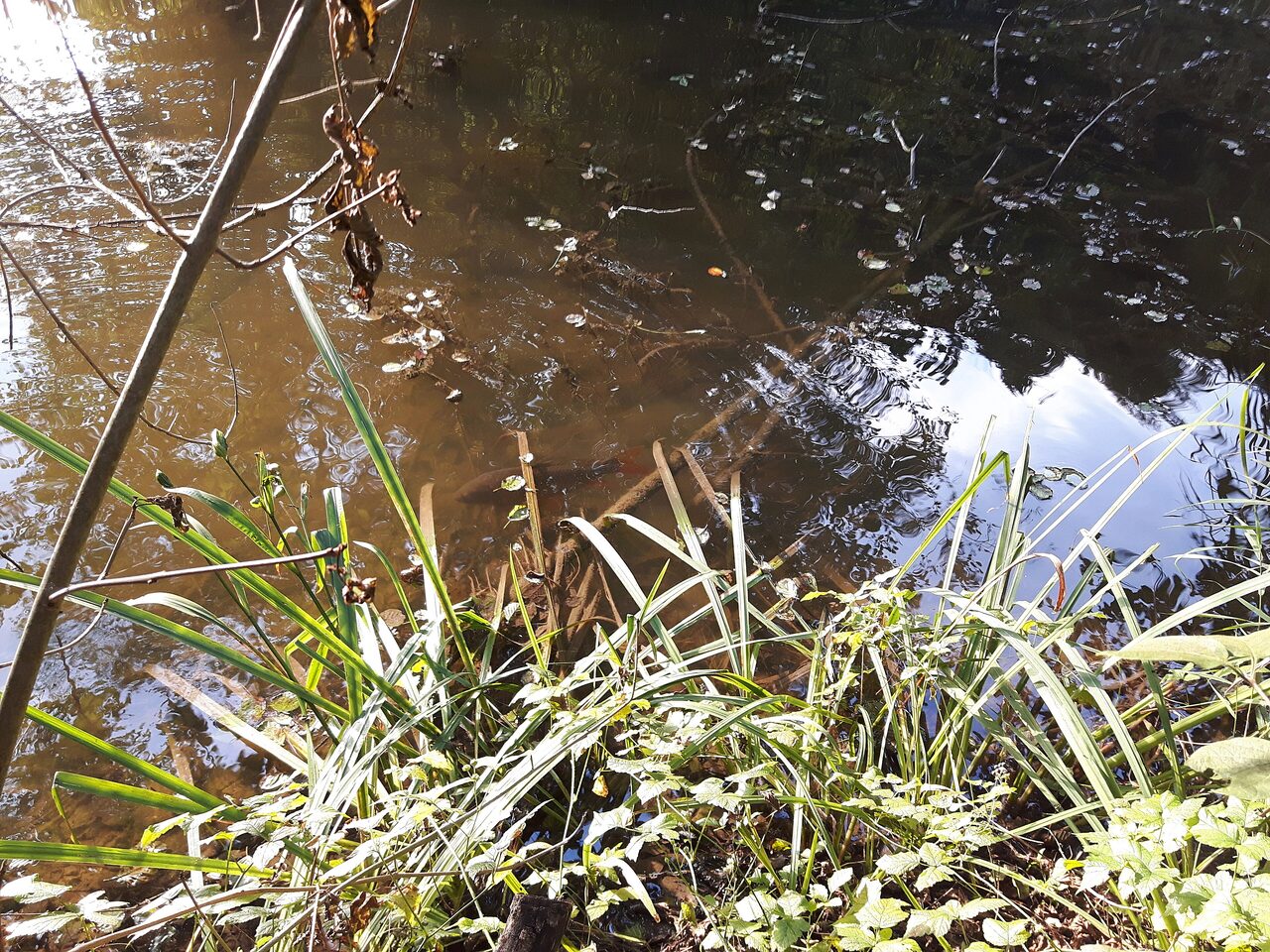
Across Germany the rudd is not a rare fish, but here it is the scarcer of the two look-alikes, and its fortunes hang on something that is quietly disappearing: warm, shallow, weedy water. Straightened, dammed and deepened rivers leave it fewer of those bays, and natural predators such as pike and birds like the cormorant and the grey heron take their share too, as one factor among several. That is why the region counts it among the fish it deliberately supports.
Biological and legal notes are a research draft; binding are the current ordinance and your permit. Rules & closed seasons.
In the kitchen
Tender, mild flesh - but full of fine bones. The old way is to sour it in vinegar for a few days until the bones soften, or to work it into fish cakes; scored and deep-fried it makes a fair „Backfisch“ too.
How to fish it: light float tackle over the weedy shallows, a fine line and a small hook (14–18) with maggot, sweetcorn or bread, offered just under the surface or in mid-water for this upward-looking fish. A little steady groundbait keeps the shoal in place - an ideal fish for beginners.
Common questions about the rudd
Rudd or roach - how do I tell them apart?
Look at the mouth first: the rudd's points distinctly upwards, the roach's is straight and terminal. Then the dorsal fin - on the rudd it sits well behind the pelvic fins, on the roach right above them. Add a sharply keeled belly edge and a golden-yellow eye and you have a rudd; a rounded belly and a red eye mean roach.
Why is it called the red-feather?
Because of its fins: the pelvic, anal and tail fins glow a vivid orange to blood-red, brighter than the roach's, and set off beautifully against the brassy, golden flanks. The old word „Feder“ simply meant a fin.
Why does its mouth point upwards?
The rudd is a surface feeder. The upturned mouth lets it pick insects, seeds and soft plants straight from the film of the water and the weed just below it - which is why you meet it in warm, shallow, plant-rich bays.
Is the rudd rare in the Franconian Saale?
It lives here, but it is the rarer of the two red-finned look-alikes; the roach turns up far more often. Because it depends on weedy shallows, the region gives it a hand, counting it among the fish that are supported with careful stewardship and young stock.
Can you eat rudd?
You can - the flesh is tender and mild, but very bony. Traditionally it is soured in vinegar for a few days until the fine bones soften, or worked into fish cakes; scored and deep-fried it makes a good „Backfisch“ too.
Does the rudd have a closed season?
Under Bavarian law it has neither a closed season nor a minimum size. But a local water can set stricter rules of its own, so your permit and the water's regulations always have the final word.
Fish this stretch of the Saale
For the water at Wolfsmünster and Gräfendorf there are guest cards from a day ticket to a season permit, entirely without club membership.