Plate XV · the river's most common fish
Roach
Rutilus rutilus
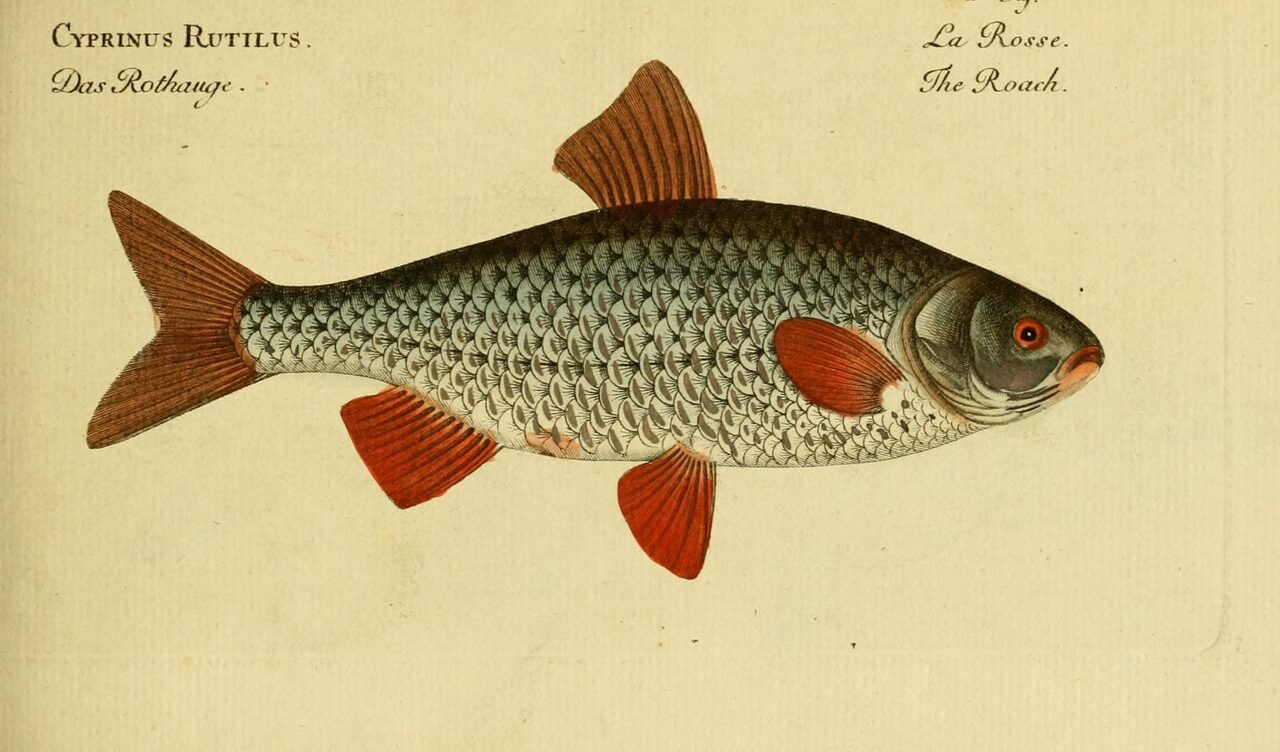
How to know it at once
- The red eye - a bright red iris, often with a red spot at its upper edge. The feature that gives the fish its name.
- Straight, terminal mouth - set at the front, level; not tilted upwards.
- Dorsal fin above the pelvic fin - both begin at roughly the same height.
- Rounded belly edge - no sharp keel; flanks silvery, lower fins reddish.
The roach is a sociable, silvery cyprinid and one of the most adaptable fish there is. In the Franconian Saale it is at home along the summer-warm middle and lower river: over harder ground in the lee of the current, behind groynes, in quiet bays and impoundments. It is undemanding, tolerates warmer water, and it is almost everywhere.
As a shoal fish it is rarely alone, and rarely far away, which makes it the reliable companion of nearly every day on the water and a grateful first fish for beginners.
- red eye
- straight, terminal mouth
- dorsal fin above the pelvic
- rounded belly edge
- yellow-golden eye
- upturned mouth
- dorsal fin set well back
- sharply keeled belly edge
The surest tell is the belly edge: rounded means roach, keeled means rudd.
By far the most common fish here
No fish shapes the Franconian Saale like the roach. In dense, silvery shoals it stands over harder ground, behind groynes and in the quiet bays, and wherever you cast, a roach is rarely far. It is the everyday fish of the river, and far more than that.
For those shoals are the backbone of the food web: pike, perch and zander live largely on roach, and otters and fish-eating birds find their table laid here too. A river full of roach is a river that can feed its predators as well, so an ordinary silver fish quietly carries a great deal of the water on its back.
What makes the roach special (here)
In Franconia the roach falls under the friendly umbrella term Weißfisch, the white fish, shared with rudd, bream, dace and chub. It is the plain, everyday word for the silver shoals of the Saale.
In one gentle stock count in the Saale and the Main, 558 roach came into the net and straight back again, averaging just under ten centimetres. Proof of how full of young roach the water really is.
For a great many anglers here the very first catch is a hand-sized roach, gently unhooked and slipped back into the river. A small silver fish, and a lifelong memory.
To keep the shoals strong, the fishers of the region return roach to the Saale and the Main again and again, in some years literally by the tonne. Care for the ordinary fish is care for the whole river.
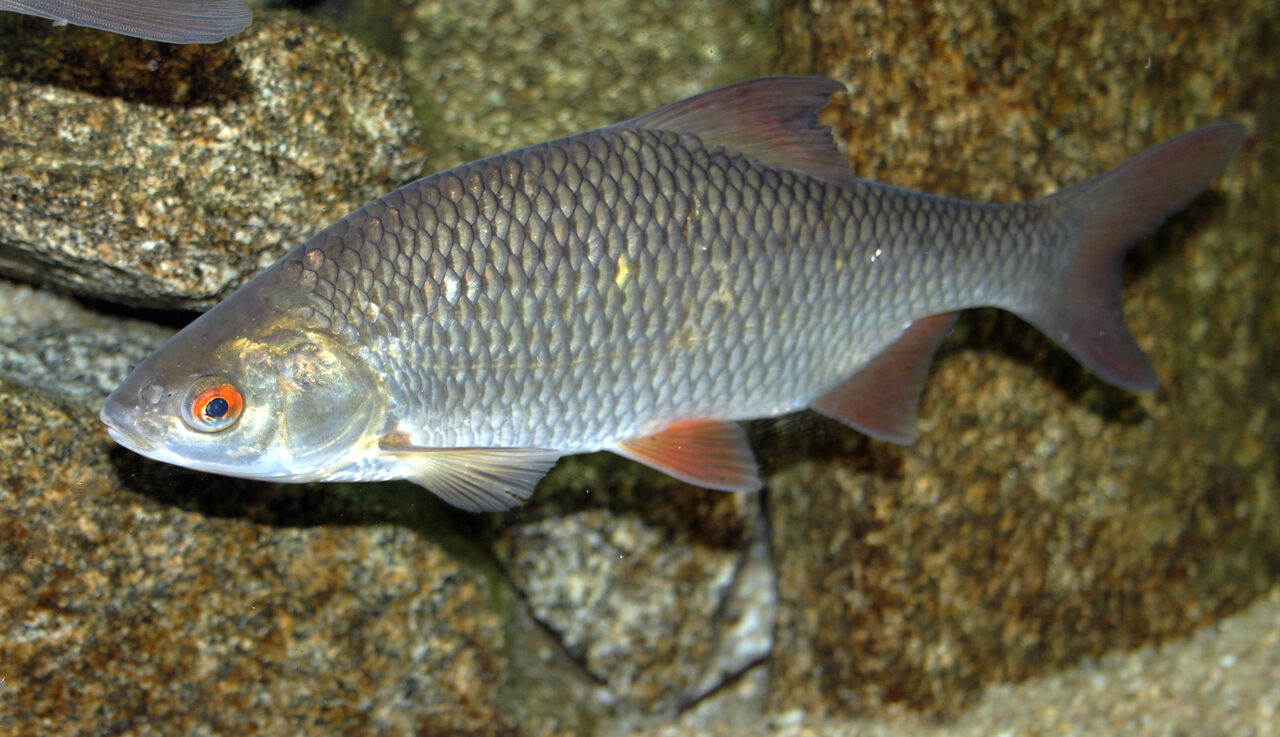
The red eye for real
The old plate only hints at it; on the living fish it truly glows - the red iris in a silvery face, above a slim, coppery-shining body. Once you have seen it, you will spot a roach at a glance forever after.
Not endangered, but not to be taken for granted
The roach is on no Red List; on the contrary, it is the most common and adaptable fish in the river. Even so, its shoals cannot be taken for granted: river engineering, hardened banks and the loss of shallow, weedy spawning zones have thinned the stock in places. Predation by birds such as the cormorant is named too, though experienced conservationists count it as one factor among several, not the sole cause. Where the roach stay plentiful, the whole river is doing well.
Biological and legal notes are a research draft; binding are the current ordinance and your permit. Rules & closed seasons.
In the kitchen
Tender, mild flesh, but very bony. Traditionally roach are soused for a few days until the fine bones soften, worked into fishcakes, or scored and deep-fried so the bones crisp away. Anyone who would rather leave the shoals in the river does the predators a favour.
How to fish it: fine float fishing with small hooks and maggots just above the bottom, with sparing, regular ground-bait to hold the shoal. Early morning and dusk are prime, and it bites all year round.
Closed season on the spot: No closed season in the AVBayFiG; the district ordinance lists 1 Apr – 15 May for the Main – check applicability to the Saale on the permit.
Common questions about the roach
Roach or rudd?
Feel the belly edge between the pelvic and anal fin: rounded means roach, sharply keeled means rudd. Add the mouth (straight and terminal on the roach, tilted upwards on the rudd) and the dorsal fin (above the pelvic fin on the roach, set well back on the rudd) and it is settled.
Why is it called Rotauge, the red eye?
Because of its most charming feature: the bright red iris, often with a little red spot at the top of the eye. It is the fish that literally wears its name on its face. In young fish the colour can be paler, so for a sure call take the mouth and belly edge as well.
Why does the roach matter so much for the river?
Because its shoals are the backbone of the food web. Pike, perch and zander live largely on roach, and otters and fish-eating birds share the table too. A river full of roach is a river that can carry its predators as well.
Does the roach have a closed season here?
By Bavarian law it has neither a closed season nor a minimum size. Local rules can be stricter, though, so a closed time or bag limit may apply on your stretch. Your permit and the water's rules always have the final word.
How do you fish for roach?
Fine float fishing is the classic: small hooks and maggots offered just above the bottom, with sparing, regular ground-bait to hold the shoal. Early morning and dusk are prime. It bites all year and is the perfect fish for beginners.
Can you eat roach?
Yes, the flesh is tender and mild, but very bony. Traditionally it is soused for a few days until the fine bones soften, or scored and deep-fried so they crisp away. Many anglers happily return it to keep the shoals strong.
Fish this stretch of the Saale
For the water at Wolfsmünster and Gräfendorf there are guest cards from a day ticket to a season permit, entirely without club membership.