What the river remembers
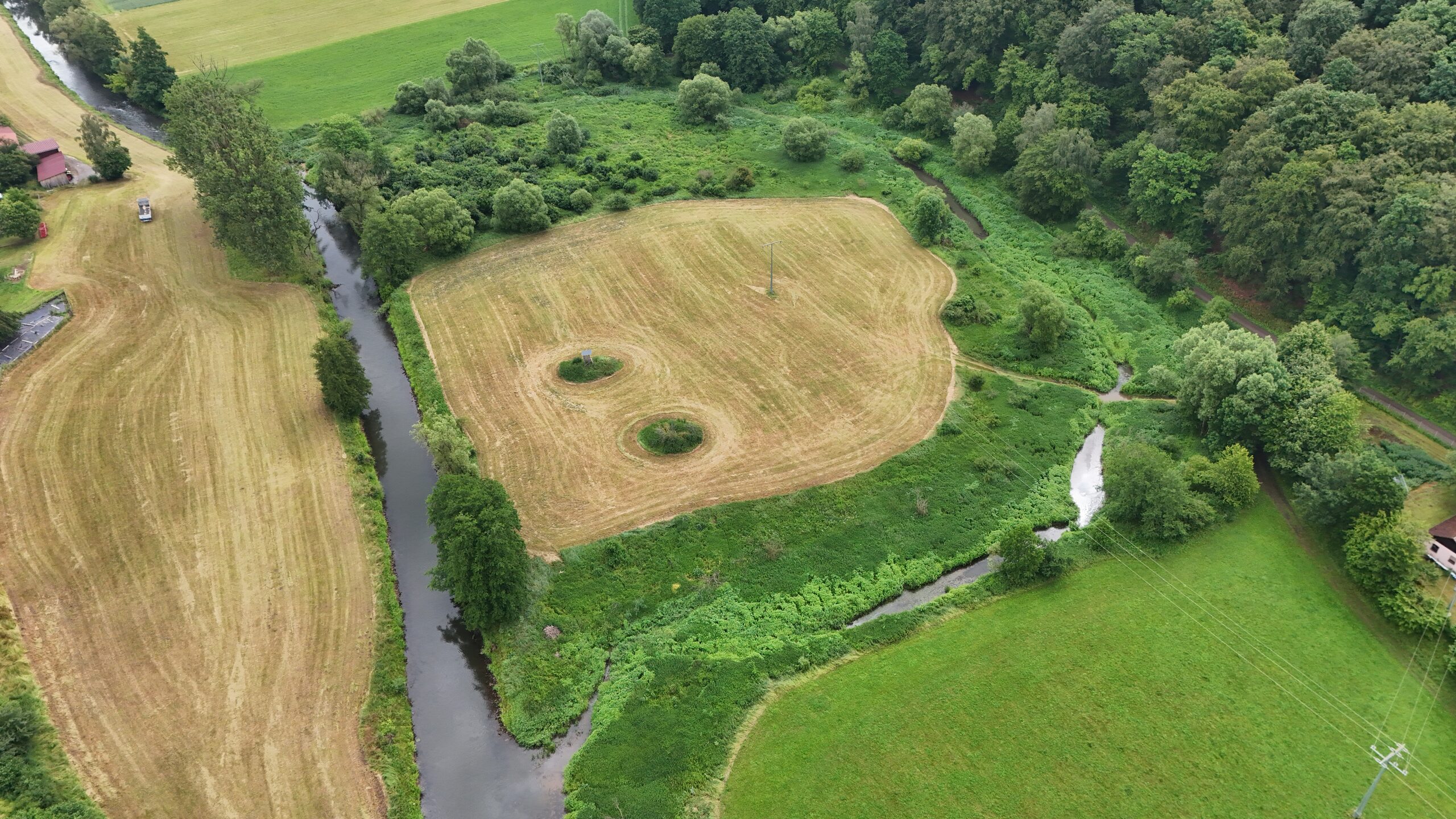
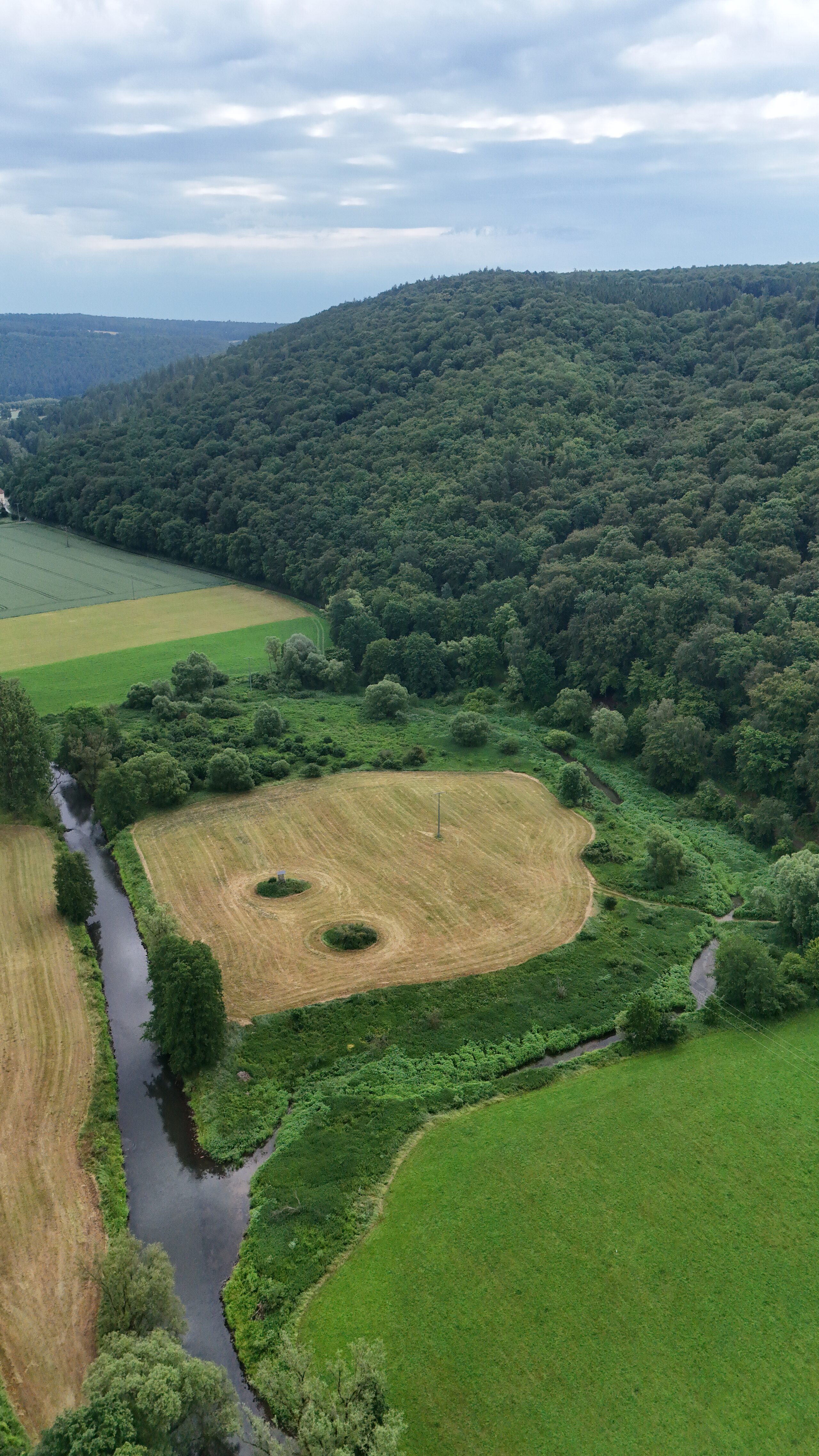
For centuries the Saale fed the villages between Weickersgrüben and Gemünden: fishers in their flat boats, mills at every weir, rafts of timber, a ferry that still swings across at the Roßmühle. Much of that history is written into the river itself - including the great bend, straightened for rafting and reopened a lifetime later.
More than a thousand years on the river
A river keeps time differently. Here are the markers that still shape this stretch - from the first record on its banks to the day the Saale got its old bends back.
-
802
The first record
Wolfsmünster is first mentioned - as „Baugolfszell“, a cell founded by Baugulf, abbot of Fulda. Over the centuries Baugolfszell becomes Wolfsmünster.
-
1243
The three-river town
Gemünden, where Sinn, Saale and Main meet, is first recorded. The fish-rich flood meadows had drawn settlers since the Stone Age.
-
1567
The fishers' guild
The Gemünden Fishers' Guild appears in the records - a living institution to this day, with its January feast day and its fish-jousting.
-
1882
Trout at Seewiese
Friedrich Zenk founds the Seewiese fish farm opposite Schonderfeld - reputedly the oldest trout hatchery in Germany. By 1892 it ships millions of eggs by its own railway halt.
-
~1920
Straightened for the rafts
To ease the timber rafting, the Saale at Gräfendorf is straightened and its great meander filled in. The river runs faster, but loses its quiet spawning bends.
-
2001
The bend returns
Some eighty years on, a 500-metre meander is dug open again at Gräfendorf - new spawning grounds and flood storage, the river edging back towards its old shape.
-
today
Tended, fished, visited
Guild, clubs and the hegefischerei tend the water; anglers and paddlers come to the valley. The old trades are gone - the care for the river is not.
When fishing fed the town
Around 1830 Gemünden counted some 28 fishers and three boat-builders. They worked the river from the flat „Schelch“, tending woven traps for eel, barbel and roach, and carried timber, hides and wine downstream.
Their best-known figure is Johann Edmund Roth, „Dapser Hannes“ (1841-1924), who ran the Saale several times a week to check his traps and stopped in at Schönau. In the great flood of 1909, when the water stood at the church steps, the fishers ferried people through the streets for a tip.
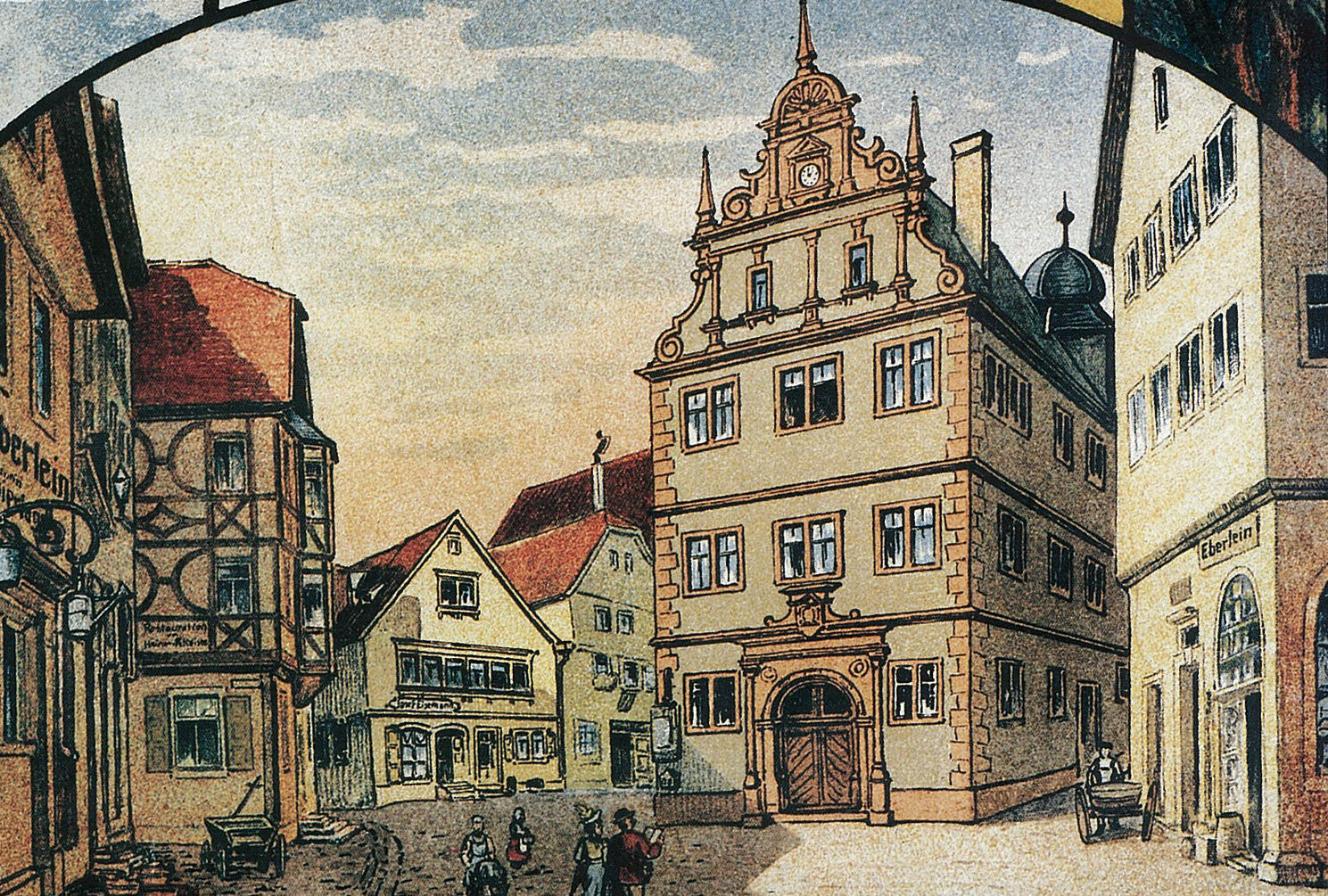
Old town hall of Gemünden, 18th century · public domain (Wikipedia)
A hatchery in the Saale valley
Opposite Schonderfeld lies the Seewiese fish farm, held to be one of the oldest - if not the oldest - trout hatcheries in Germany. In 1882 Friedrich Zenk bought the fishing right on the Fischbach for 40 marks; by 1892 the farm shipped millions of eggs from its own railway halt, and it still runs today with 28 natural ponds fed by the Ochsenquelle spring.
Where the river was crossed and worked
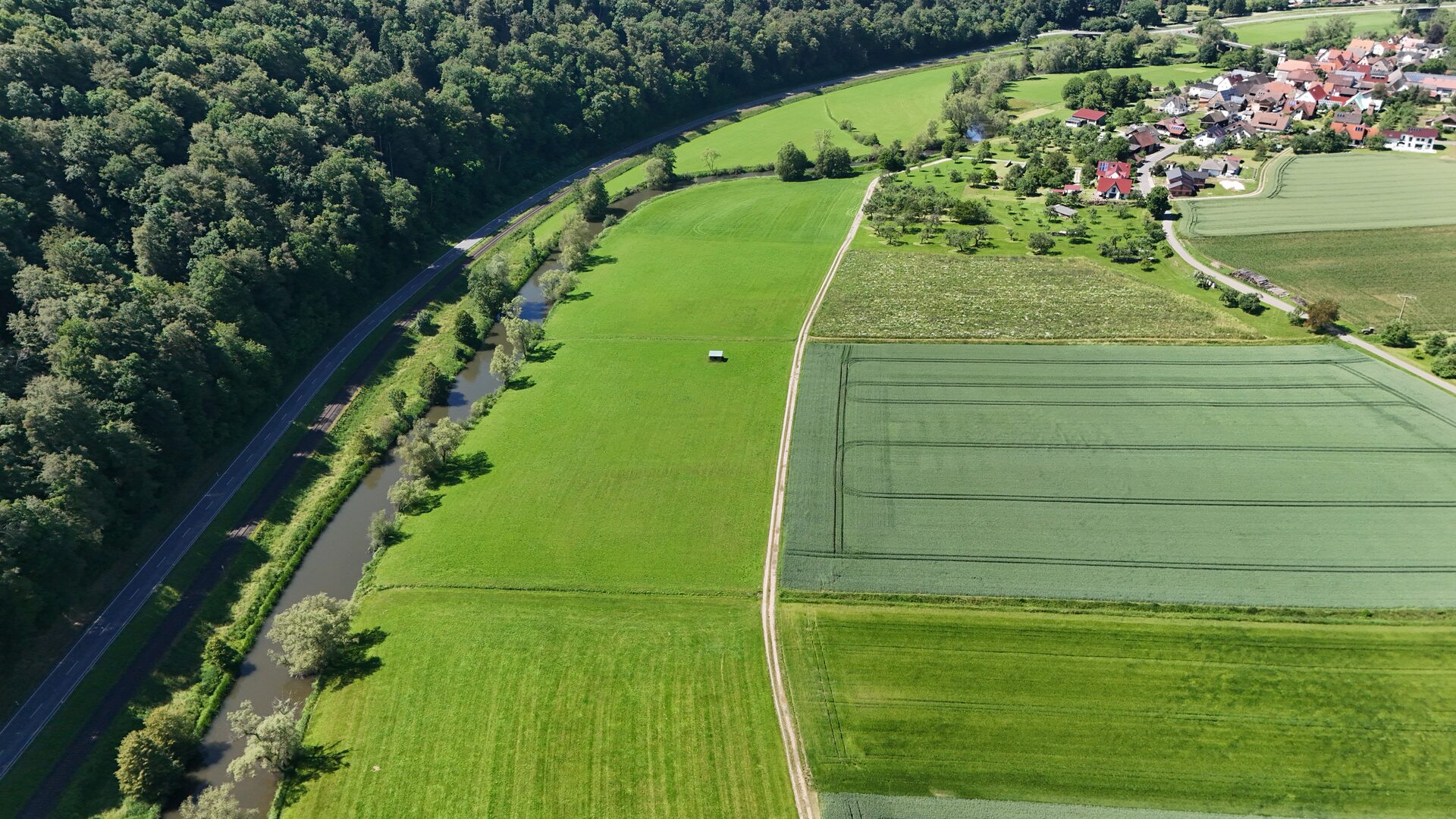
Every weir once turned a mill: the Roßmühle by Weickersgrüben - now a leisure spot, its Saale weir still in place - the Seemühle, an old paper mill, the Lohmühle. At the Roßmühle a floating ferry-bridge has linked the banks for over forty years; it is so flood-prone that the fire brigade must pull it from the current above 2.85 metres, and it sank in the 2003 flood. A solid replacement would cost about a million euros.
The bridges tell their own age: the sandstone arch at Wolfsmünster, a favourite stand for fly-fishers, joined by a footbridge in 2010/11; the roughly 200-year-old Saale bridge at Gemünden with its „Gemünda“ mermaid; and at Schonderfeld a climbing route that runs up a pier of a never-finished motorway bridge.
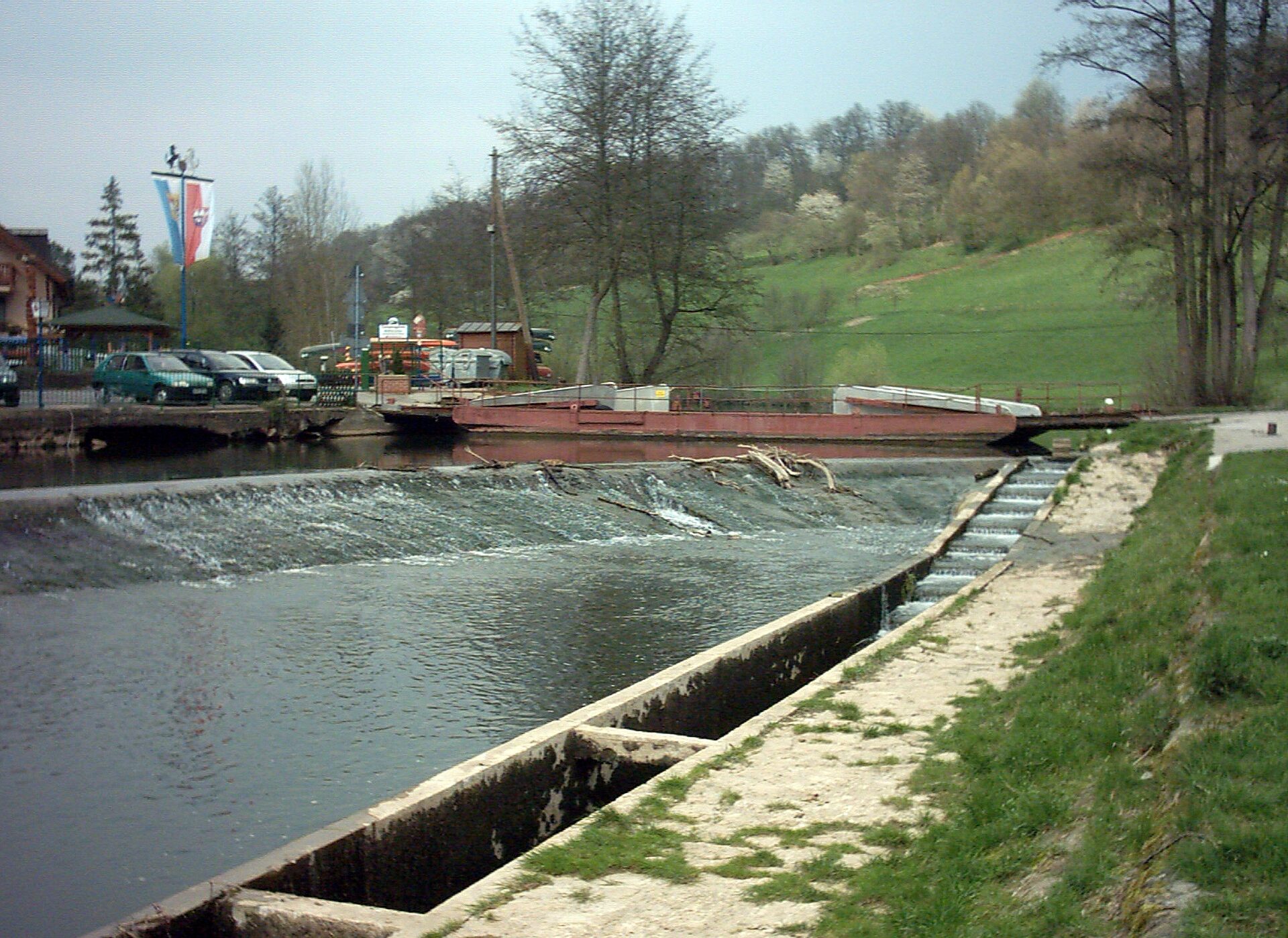
Photo: presse03 · CC BY-SA 3.0
The same river, still living
The guild and the village clubs keep the old year going; the water itself is tended as carefully as ever. Two pages pick up the thread.