Letting the fish through
Fish must travel to live: up to the gravel to spawn, down towards the sea. Every weir is a wall in that path. Here is how we keep our stretch of the Saale passable - and why one fish gets a lift by lorry.
The eel's long way to the sea
Our eels are born in the Sargasso Sea, grow up in the Saale - and must return there to spawn. On the way down the Main, dozens of barrages block them. So we give them a lift.
A river fish lives by moving
Barbel and nase run upstream to spawn over clean gravel; trout seek the cool, fast riffles; the eel sets off downstream on a journey of thousands of kilometres. Cut the river into still, separate pools and you cut these life cycles in two.
Three weirs divide our reach into impounded sections. Keeping fish moving past them - up and down - is one of the quiet, constant tasks of „Hege“.
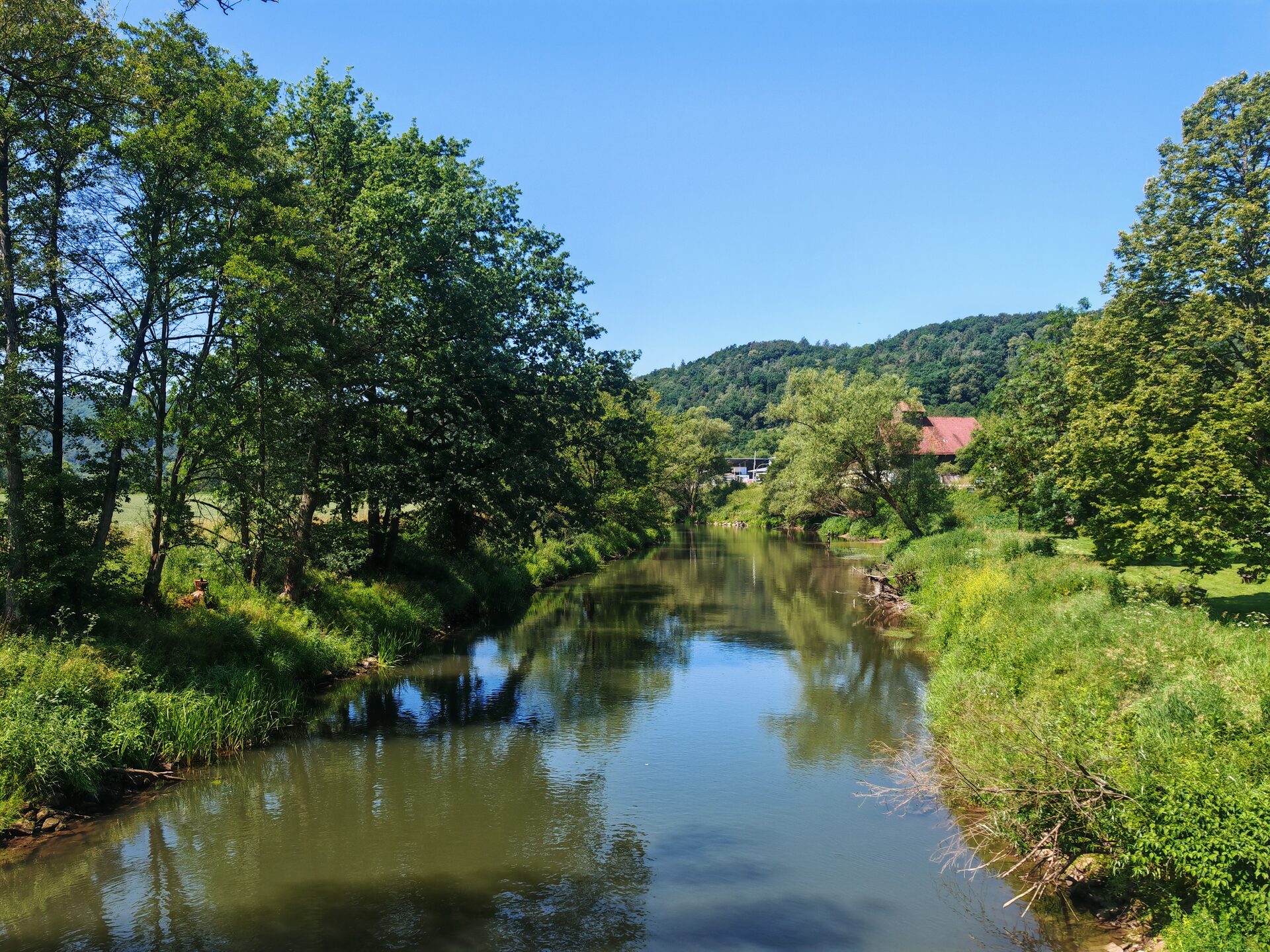
A staircase for fish at Gräfendorf
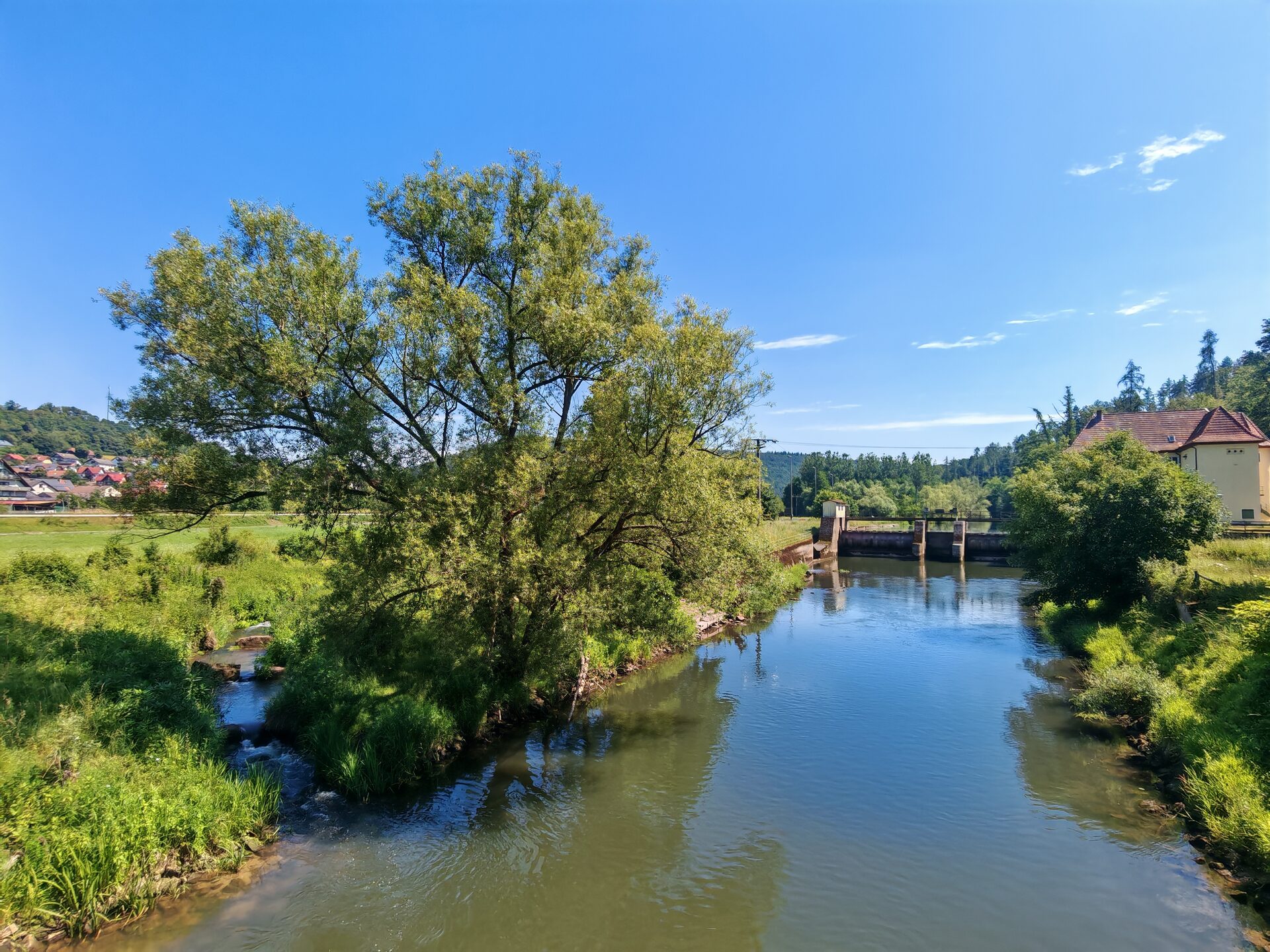
At Gräfendorf a weir with a small hydro-power plant backs the Saale into a deep, calm pool. To keep the river passable, a bypass channel with a fish ladder runs beside it - a chain of small pools the fish can climb, fed by a steady flow of its own.
In the spawning season you can watch fish working their way up through the pools. It is the clearest sign that the river still hangs together - from the Main up past Gräfendorf and beyond.
When swimming is no longer safe
Downstream of Gemünden the Main becomes a flight of barrages, each with turbines that migrating eels rarely survive. So since 2009 the eels are caught, counted and driven the dangerous part by lorry.
The eels are gathered at a collecting station near Harrbach, below Gemünden, then released into the lower Rhine - past the worst of the barrages, with a real chance of reaching the open sea. The power companies whose turbines stand in the way help pay for the lift.
Eels from our Saale travel with them. It is a workaround, not a cure - but for a fish whose numbers have collapsed across Europe, every one that reaches the Atlantic counts.
Clean power and living rivers
Small hydro-power is climate-friendly, and the mills on the Saale are part of its history. Yet many small plants add up to many barriers, and on the Main their turbines weigh heavily on migrating fish. We do not argue against water power as such - we argue for rivers that fish can still pass: working ladders, sensible flows, and help for the eel where passage fails.